
We have compiled the following list of resources for educators interested in learning more or implementing what they have learned in our 2022 workshop "Teaching Confucianism, Daoism, and Buddhism" as a reflective curriculum within their classroom.

This article from the Asia Society provides helpful background context and primary source references for teaching the subject of Confucianism. Confucianism was established between the 6th and 5th centuries B.C.E. by its founder known as Master Kong (Confucius, 551-479 B.C.E.) whose intention was to reinterpret the undefined Zhou religion. The basis of this social and ethical philosophy was tradition, defined roles within relationships, and mutual obligations. Confucianism, along with Daoism and Legalism, is one of the philosophies that has shaped China for thousands of years and represents an integral part of Chinese history. For primary source information on Confucianism, check out this translation of "The Great Learning" (one of The Four Books in Confucianism) provided by the Indiana University.
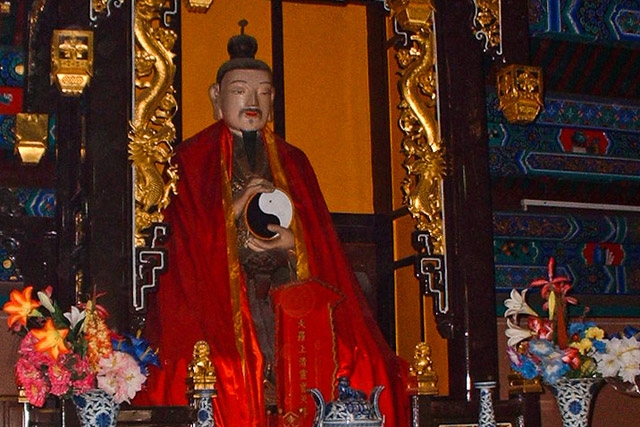
This article from the Asia Society provides helpful background context and primary source references for teaching the subject of Daoism/Taoism. Daoism originated in the 5th century B.C.E. from the teachings of Laozi and his classic text, the Dao De Jing. The basis of this philosophy was connection with nature, a life of simplicity, and a spiritual approach to the universe. Daoism, along with Confucianism and Legalism, is one of the philosophies that has shaped China for thousands of years and represents an integral part of Chinese history. For more information on Daoist primary sources, check out Dao Qian's "Peach Blossom Spring" provided by Asia for Educators, or a copy of Laozi's Dao De Jing provided by the University of Florida.
 The Origins of Buddhism | Asia Society
This article from the Asia Society provides a brief overview of the origins of Buddhism from the life of Siddhartha Gautama (the Buddha) to the spread of Mahayana Buddhism to China, Tibet, Korea, and Japan. This overview also briefly summarizes core Buddhist teachings such as the Eight-Fold Path and the Four Noble Truths. For additional information on Buddhism, check out the Buddha-Carita (The Life of Buddha).
The Chinese Text Project is a database of pre-modern Chinese texts on subjects such as Confucianism, Daoism, Mohism, Legalism, and various academic studies. This resource, recommended by Dr. Nicholas Brasovan, is a great place to find primary sources on Chinese religio-philosophical schools.
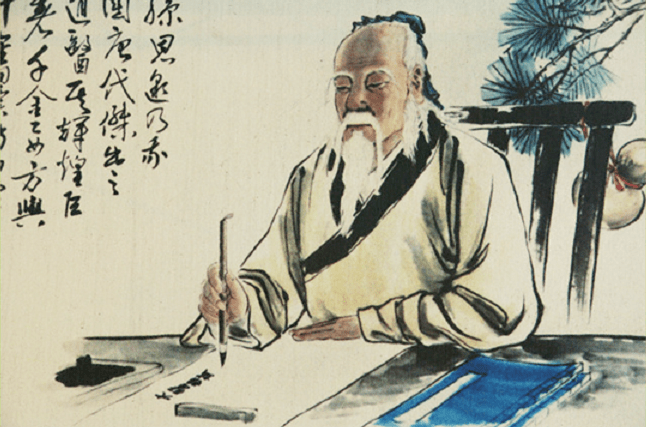 Tao Te Ching - Translation Comparison
This website displays multiple translations of the Tao Te Ching side by side for comparison. The Tao Te Ching is a central Daoist text written around 400 BCE and attributed to Laozi, the philosopher credited with the foundation of Daoism.
 Contemplative Pedagogy | Columbia CTL
If you enjoyed Dr. Gloria Chien's presentations (we definitely did), here is a resource for more information. The Columbia University Center for Teaching and Learning's guide to Contemplative Pedagogy includes: an introduction, a list of contemplative methods, an explanation of different practices, a plan for getting started, and additional resources for further information. If you're considering implementing Contemplative Pedagogy in your classroom, this guide is a great place to start!
Videos recommended by Dr. Natasha Mikles:

Ancient Ritual Ceremony at Taipei Confucius Temple
Is Confucianism a religion? Show this video to your students and ask, if this ritual was instituted at their high school to be performed everyday as a means of instilling proper respect for education, what would parents think? When they respond that parents would be reluctant, ask them what the problem is, if it is not a religion. Students may find themselves in a bind and realize that gods might not be all they need to have a religion.
This 1967 film is a retelling of the life of the Chinese bodhisattva Guanyin. It is especially useful for teaching about Buddhism, gender, and the religion's efforts to combine Confucian ideals of filial piety with Buddhist values. The film is an entertaining and educational resource for undergraduate classrooms.
These three videos on Daoism are useful for presenting a different view of Daoism than the strictly philosophical view one might get from the Dao de Jing. Show these clips to your students and have a discussion about how these rituals and Daoist medicine represent practical application of religion rather than "magic."