
All materials included in our workshop, "Traveling the Silk Road: Culture & Commerce in Medieval Asia," are linked here! Each material is listed with a brief description and are organized by unit. Also check out the workshop's Google Slides presentation. Additional resources such as activity guides for books provided by the workshop and a collection of online resources on the Silk Road can also be found below.
Mapping the Silk Road: Geography and Commerce

ArcGIS is a web-based mapping tool developed by Environmental Systems Research Institute (ESRI) that allows users to create maps based on Geographic Information System data.

“Travels of Xuanzang” is an interactive depiction of the pilgrimage of Xuanzang, a Chinese monk who traveled 10,000 miles along the Silk Road and the Indian subcontinent in search of Buddhist texts.

This activity created by the Field Museum of Chicago poses the question, is the Silk Road an example of globalization? Students explore the Silk Road trade networks through museum resources and a reenactment of exchange along the route. The pdf also includes background information, discussion questions, and objectives for use in lesson planning.
The Great Vehicle: Mahayana Buddhism & The Silk Roads

An initiative of the Weatherhead East Asian Institute at Columbia, AFE aggregates materials to serve K-12 teachers across disciplines. The links below are AFE primary source texts related to the spread of Buddhism as a result of the Silk Road.
Six Texts on Buddhism in East Asia
From “Buddhism in China”:
“The Lotus Sutra: The Buddha Preaches the One Great Vehicle” [3rd Century CE]
A section of key Mahayana text The Lotus Sutra addressing the question of multiple Buddhist schools.
Mouzi’s Disposing of Error [3rd Century CE]
Confucian, Buddhist, and Daoist scholar, Mouzi, addresses criticism of Buddhism encountered in China
Han Yu’s “Memorial on the Bone of the Buddha” [819 CE]
Tang official, Han Yu, submits a memorial to the Xianzong emperor decrying Buddhism.
From “Buddhism in Japan”:
Prince Shōtoku’s Constitution [604 CE]:
6th century Japanese directive adopting Confucian and Buddhist norms in government
Selected Writings by Saichō [767 - 822 CE]
Saicho (founder of the Tendai school of Japan)’s commentary on the Lotus Sutra.
Selected Writings by Kūkai [774 - 835 CE]
Commentaries from the Founder of the Shingon School of Buddhism, who traveled extensively to China
The Silk Roads at Home: Culture and Difference in Chang’an
The following online resources include fantastic collections and contextual explanations of Tomb Figures (mingqi 冥器) and other artifacts from the Tang Dynasty.

The MET Museum: Tang Dynasty
The Metropolitan Museum of Art includes a variety of collections and essays on Tang Dynasty Silk Road Artifacts, including the following:
- Tang Dynasty (618-907) | The Metropolitan Museum of Art
- The Vibrant Role of Mingqi in Early Chinese Burials
- Buddhism Along the Silk Road
- Internationalism in the Tang Dynasty
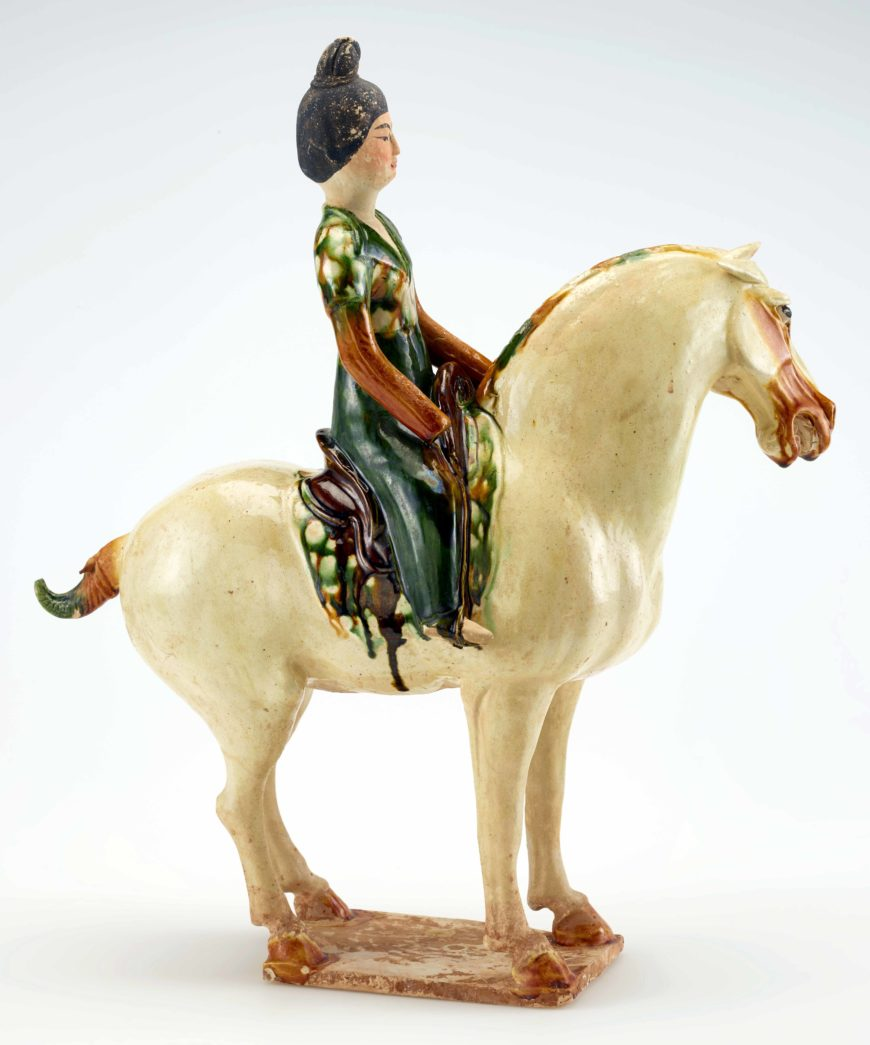
The National Museum of Asian Art (Smithsonian) has a large collection of Tang artifacts, accompanied by Sample Lesson Plans.
- Exploring Art Made for the Afterlife
- Cultural Exchange in the Tang Dynasty
- See the full collection by browsing for the following terms: Chinese Art -> Period: Tang Dynasty -> Classification: Sculpture
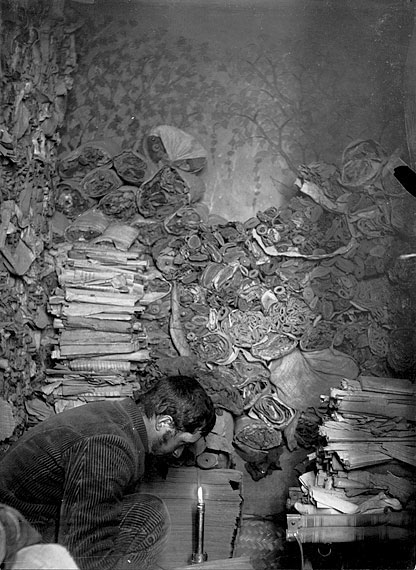 smarthistory: An Introduction to Tomb Figurines
The smarthistory Center for Public Art History contains a wealth of guides/lessons on both Tomb Figures and the Mogao caves at Dunhuang.
The Silk Roads Today: China’s Belt and Road Initiative

Yale Silk Road Database | Yale University Library
This collection includes 11,000+ images of major sites along the Silk Road taken between 2006-2010. These photographs take the viewer on a trip through multiple Chinese provinces and the regions of Inner Mongolia and Tibet to map out the modern-day Silk Road that was shaped by the interconnected web of trade routes linking medieval Asia.

Belt and Road Tracker | Council on Foreign Relations
See Also: Belt and Road Backgrounder | Council on Foreign Relations
This tracker shows how China’s 2013 Belt and Road Initiative (BRI)—a plan to promote infrastructure development across Africa, Asia, and Europe with Chinese financing—changed countries’ bilateral economic relationships with the nation over time.
Activity Guides for The Silk Roads by Peter Frankopan
As this workshop is providing participants with a copy of Peter Frankopan's The Silk Roads: A New History of the World, we also have linked below activity guides for both the illustrated and non-illustrated versions of the book.
 The Silk Roads:
Teacher’s Notes: Cities on the Silk Roads Activity
Teacher’s Notes: Silk Roads Timeline Activity
Teacher’s Notes: Silk Roads Vocabulary Activity
Teacher’s Notes: What Are the Silk Roads? Activity
Teacher’s Notes: What Flowed Across the Silk Roads Activity
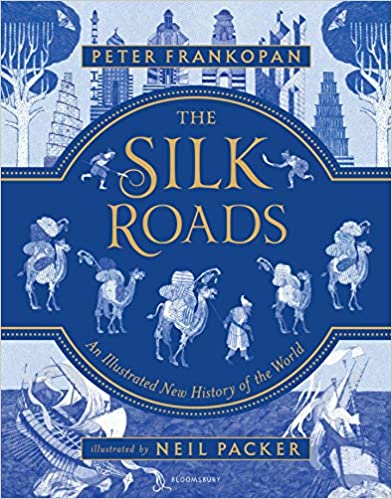 The Silk Roads Illustrated Edition:
Teacher’s Notes: Reflection Questions
Teacher’s Notes: Suggested Activities and Discussion Guide
Silk Roads Activity Pack including word search and maze
Additional Resources
The Google Doc linked here is a collection of numerous online resources on the Silk Road.