
Korea

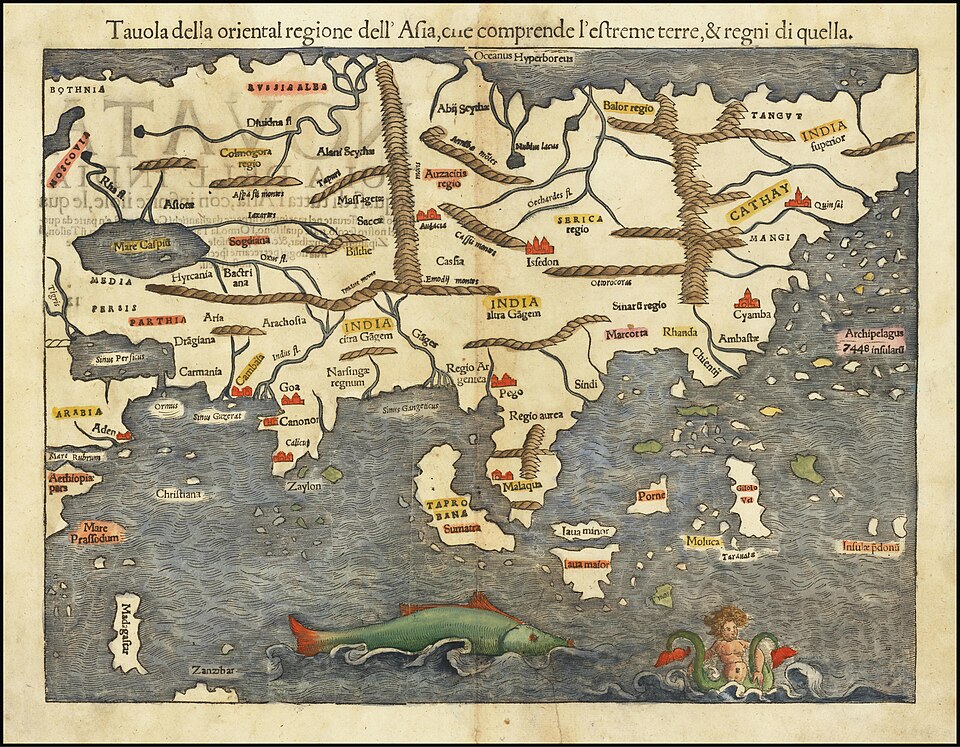
Antique map of Asia printed in Italian, showing regions, rivers, and islands with illustrations of sea creatures in the ocean

Asia by Era | Asia for Educators

An online resource that highlights art and events in different eras in Japan, China, Korea, Vietnam, SE Asia, and South Asia, with a timeline that links to different resources that cover historical events and museum collections that provide information about pieces from different eras. It can be used as a basic timeline to begin research into periods of history, used to provide background information for historical periods, such as the Kofun period in Japan, or to find artifacts that can be used in class discussions.

Student Resource Teacher Resource
A large crowd at a K-Pop concert waves light sticks while confetti falls onto a brightly lit stage with performers, creating an unforgettable experience and offering unique K-Pop facts for those interested in education about Asia.

Ten Things to Know about K-Pop | Education about Asia

“What makes K-pop distinct from other popular music? The authors explore the multifaceted evolution and global phenomenon of K-pop, tracing its origins from early twentieth-century musical adaptations to its current status as a sophisticated multimedia industry. Beginning with historical factors, including the emergence of modern Korean popular music during the colonial period, the impact of the U.S. military, and the 1997 Asian Financial Crisis, this article addresses how these factors catalyzed the genre’s development and forced a strategic shift toward international markets.”

Teacher Resource
Red Chinese seal script stamp featuring four traditional characters arranged in a square, with a white background—perfect for those interested in East Asian Studies or the University of Chicago’s cultural collections.

The Center for East Asian Studies | University of Chicago

The Center for East Asian Studies at the University of Chicago has a great list of digital resources for educators and learners. Included in this list are links to engaging lesson plans and classroom materials, as well as professional development organizations. Educators can reference this resource compilation for subjects ranging from contemporary issues to ancient history.

Teacher Resource
Cover of a Teacher’s Sourcebook for Korean Art and Culture, featuring historical photos, traditional patterns, and Korean text.

Korean Art and Culture: A Teacher’s Sourcebook – Peabody Essex Museum

This pdf document is a fantastic resource for art, art history, and religious studies teachers who want to bring Korean culture into their classroom. Korean Art and Culture: A Teacher’s Sourcebook features the Korean Art Collection of the Peabody Essex Museum in Salem, Massachusetts and contains vibrant images and informative essays about the collection. This enlightening sourcebook details many diverse forms of Korean art and whether it be paper crafts, embroidery, or pottery, you will be sure to learn something new! Also included in this resource is a glossary of symbols that are abundant in Korean art. The Peabody Essex Museum has much to offer and will inspire you to share the art and culture of Korea with your students.

Teacher Resource
Traditional Korean hanok houses line a narrow street, with modern city buildings and Namsan Seoul Tower visible in the background—a striking scene perfect for lesson plans on Korea or exploring world history through digital education.

Lesson Plans on Korea | World History Digital Education

The World History Digital Education foundation features a lesson plan library with free resources to help students and teachers learn about Korea. The lesson plans cover a variety of subjects for grades K-12 including geography, religion, history, culture, economic development, and the Korean War. 

Teacher Resource
A globe highlighting Korea and its location in East Asia with a dark circle, perfect for Asia for Educators and elementary level resources.

Elementary Level Resources: Korea | Asia for Educators

Asia For Educators, at Columbia University’s Weatherhead East Asia Institute, has compiled a collection of resources for K-5 teachers. This collection is centered around Korea and offers resources for a wide variety of subjects: geography, language, culture, history, science, math, literature, arts & crafts, and drama & music. 

Teacher Resource
The Korea Society logo features four geometric square patterns above the organization name on a blue background, reflecting its commitment to Educational Resources and cultural exchange.

Educational Resources | The Korea Society

The Korea Society is a private, nonprofit organization that is dedicated to the promotion of greater awareness, understanding, and cooperation between the people of the United States and Korea. On their site they have a vast collection of resources for teachers that include: readings with background context for getting to know Korea, multiple engaging pdf documents that cover topics from the Silla Dynasty to the Korean War, and a large collection of lesson plans that contain all the information necessary for crafting dynamic and effective lessons. Educational resources from The Korea Society are free to use and make it easy to center Korea in your classroom.

Teacher Resource
Five performers in black and white traditional-inspired outfits dance in sync on stage, holding large white fans, with a red and black background displaying the K-Pop group name ONEUS, highlighting globalization through their dynamic performance.

K-Pop and Globalization Lesson Plan | World History Digital Education Foundation

This high school lesson from the World History Digital Education Foundation uses K-pop as a case study to help students understand globalization and cultural exchange. Students analyze how Korean popular music has been shaped by global influences and how it, in turn, influences cultures worldwide through media, economics, and politics.

Lesson Plan
A performer in a white suit sings on stage with dancers, in front of a green-lit screen displaying the words GANGNAM STYLE, capturing the global energy of Hallyu.

Introduction: The Hallyu Origin Story by Rosalie Kim

From the book Hallyu! The Korean Wave (London: Victoria and Albert Museum), this introductory essay provides a concise overview of the emergence of the Korean Wave (Hallyu) in relation to pivotal points in Korean history.

Teacher Resource
A large indoor K-pop concert with vibrant pink and blue stage lights, big screens displaying performers, and an audience holding glow sticks—an unforgettable experience showcasing global success and bridging cultural differences.

How Cultural Difference Became K-pop’s Key to Success around the World | Indiana University

“What is Korean popular music (K-pop) and how is it different from American popular music? How does it continue to attract new audiences despite linguistic barriers? In North America many people have only recently heard about K-pop, the genre-fluid industry that is taking the world by storm. As top stars have appeared on all the major American late night interview programs, and caused a sensation internationally K-pop has emerged as a cultural force far from its homeland. In this presentation I will sketch the history of this industry, from entertaining American troops in the 1950s and 1960s, through protest music and to the emergence of K-pop. I will outline how the Korean government changed its policy vis-à-vis the industry until it became part of policy level discussions for soft power and nation branding. Then through an examination of the adroit use of the internet to reach disparate audiences we will

Teacher Resource
A white fabric featuring multiple South Korean flags, including the large Taegeuk symbol and black trigram markings—a striking tribute to Korean history and the spirit of Korea democracy.

When Did Korea Become a Democracy | Korea Society

This lesson plan created by Brian Burback details how to get high schools to research on and evaluate South Korea’s democratization process. The activities included will allow students to learn about the various South Korean presidents that were part of the country’s democratization process and think critically about during which presidency Korea truly transitioned to a democracy. Teachers can stick to this lesson plan or expand on this by incorporating some of the materials introduced in the lecture (e.g. definition of democracy, benefits of democracy, introducing the Polity V score). 

Lesson Plan
A black and white illustration featuring circular and rectangular patterns, a round medallion, and a flame-like motif on a plain background, inspired by the artistry of Silla Korea during its Golden Age.

Silla Korea and the Silk Road: Golden Age, Golden Threads | Korea Society

“Silla Korea and the Silk Road: Golden Age, Golden Threads” is a 192-slide curriculum guide developed for high school world history and geography courses, published by the Korea Society. The guide shows how contemporary themes of globalization in Asia are not new, as indeed, trade in goods and cultural practices along the Silk Road had a profound effect on Korean states, and in turn helped to spread Korean culture to other parts of Asia. The guide is divided into five parts:   1. Was Silla (Korea) Part of the Silk Road? [A nice overview of Silk Road History]   2. Did the Silk Road Create Silla’s Golden Age?  [A Detailed Account of Global Influences on the Korean Peninsula]   3. Sillan Individuals and the Silk Road [Fantastic individual biographies of notable figures in Silla history]    4. Concluding Exercise: Does International Trade Help or Hurt Culture?   5. Advanced Readings.

Teacher Resource
Scroll to Top