
Southeast Asia

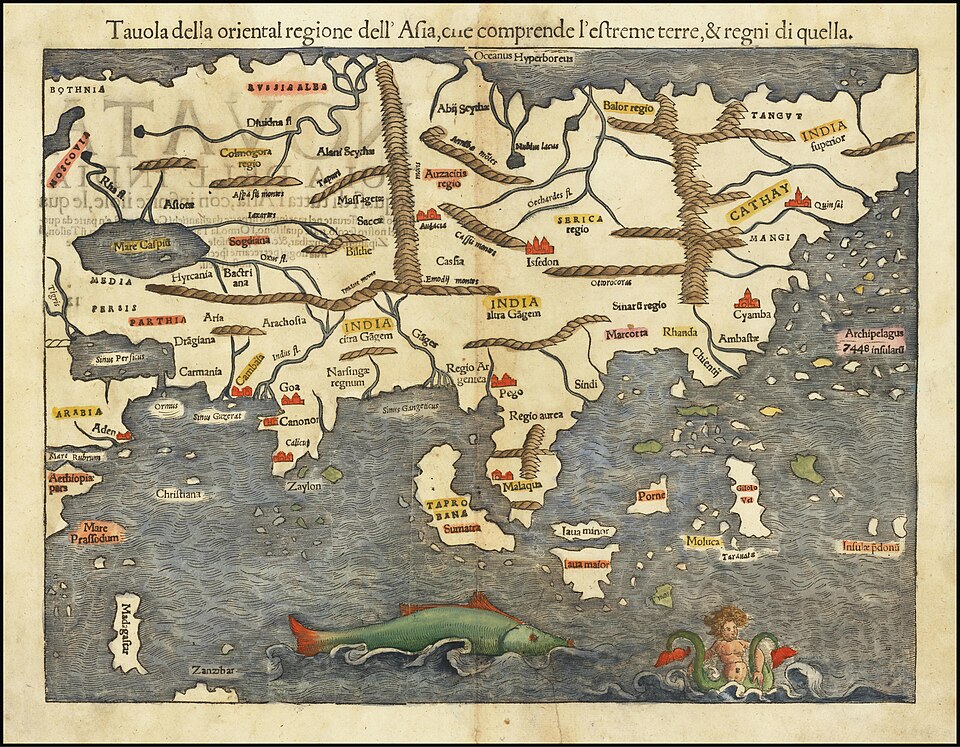
Antique map of Asia printed in Italian, showing regions, rivers, and islands with illustrations of sea creatures in the ocean

Asia by Era | Asia for Educators

An online resource that highlights art and events in different eras in Japan, China, Korea, Vietnam, SE Asia, and South Asia, with a timeline that links to different resources that cover historical events and museum collections that provide information about pieces from different eras. It can be used as a basic timeline to begin research into periods of history, used to provide background information for historical periods, such as the Kofun period in Japan, or to find artifacts that can be used in class discussions.

Student Resource Teacher Resource
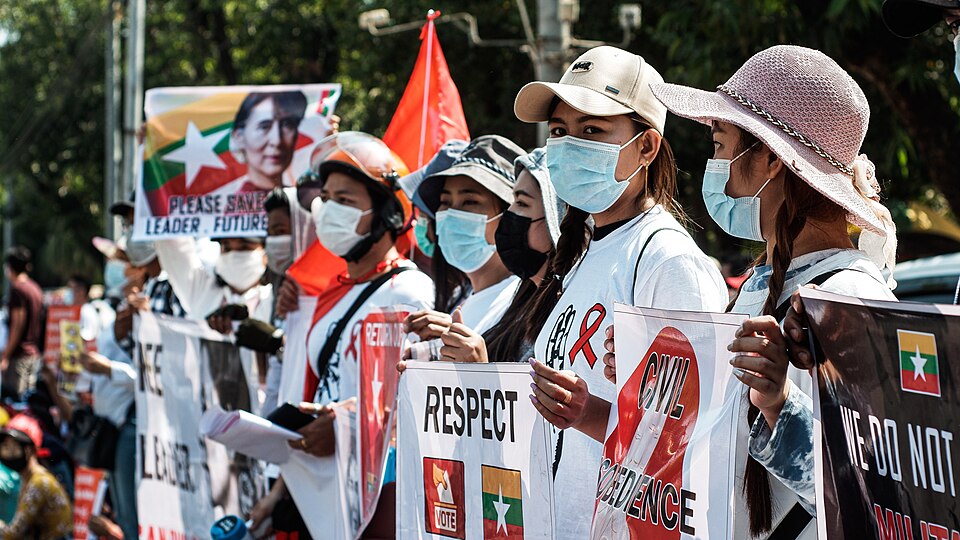
A group of masked protesters, including members of Generation Z Myanmar, stand in a row holding banners and signs during a daytime demonstration advocating for Civil Disobedience, with flags and images visible in the background.

The Teaching of Civil Disobedience through Letters from Burma’s/Myanmar’s Generation Z | Education About Asia

This lesson plans highlights letters from Gen Z protesters participating the Civil Disobedience Movement (CDM) in Burma, as well as an original story from a Bamar girl’s perspective that follows the past and present of Burma. These letters were gathered by the students who joined the movement and founded the non-government media-platform People’s Radio Myanmar, then developed the letters into a lesson plan that covers history, social studies, and language arts. It provides different ideas for class activities, including readings with writing exercises that can be done in a group or individually.

Lesson Plan
Black and white map of Singapore labeled in Japanese, showing roads, key locations, and water bodies around the island—a unique perspective on South East Asia during the era of decolonization.

Decolonization in South East and South Asia (1945-1948) | Imperial War Museums

This informational website created by the Imperial War Museums provides a brief history of the decolonization process of countries in South and Southeast Asia. This information complements the other sources as it completes the history of colonization in Southeast Asia, in particular, how each country was able to gain its independence. The website is well-suited for teachers planning world history units at an upper level course.

Student Resource Teacher Resource
Four soldiers run along a road carrying rifles and a flag, with large plumes of smoke and fire—echoing the turmoil witnessed during Imperial Takeover in Southeast Asian countries—rising in the background.

Southeast Asian Countries and the Imperial Takeover (Part II) | Pacific Atrocities Education

This educational website is provided by Pacific Atrocities Education, a non-profit organization dedicated to raising public awareness about the human rights violations and war crimes committed in the Asia-Pacific Theatre of World War II by the Japanese Imperial Army. It provides a brief but informative historical overview of Japan’s takeover of Southeast Asian countries during WWII and is great for middle and high school teachers as it provides related pictures, YouTube clips, and reference readings that can be used in class. [A continuation of the previous article with additional pictures, videos and readings provided.]

Teacher Resource
Japanese soldiers on bicycles ride down a street lined with civilians waving Japanese flags, creating a scene of welcome during the imperial takeover of Southeast Asian countries.

Southeast Asian Countries and the Imperial Takeover (Part I) | Pacific Atrocities Education

This educational website is provided by Pacific Atrocities Education, a non-profit organization dedicated to raising public awareness about the human rights violations and war crimes committed in the Asia-Pacific Theatre of World War II by the Japanese Imperial Army. It provides a brief but informative historical overview of Japan’s takeover of Southeast Asian countries during WWII and is great for middle and high school teachers as it provides related pictures, YouTube clips, and reference readings that can be used in class.

Teacher Resource
Black and white photo of people in traditional attire standing in a rural Southeast Asia village with thatched roofs; one person is being carried on a stretcher. Old Indo-China postage stamp in upper left corner hints at colonialism.

Colonialism in South & Southeast Asia | Students of History

This educational page by Students of History provides an overview of colonialism in South and Southeast Asia, which spanned from 16th to mid-20th centuries. This explains the effects of colonialism on various aspects of life including geography, people, and the different countries within South and Southeast Asia. Designed for middle and high school classrooms, the site offers a clear introduction to colonialism prior to and during WWII, helping teachers set the stage for the topic.

Student Resource Teacher Resource
A group of adults and children walk down a road carrying belongings, with baskets and bags balanced on their heads and backs, in a rural setting—an image often studied in Genocide Studies, such as during the Cambodian Genocide.

The Cambodian Genocide | Center for Holocaust and Genocide Studies

The Center for Holocaust and Genocide Studies at the University of Minnesota has a great list of digital resources for educators and learners. Included in this list are short introductions to the Khmer Rouge, its leader Pol Pot, and the legacy of the Cambodian Genocide. Each section includes relevant student and teacher resources, such as primary source photos and videos and links to further reading.

Student Resource Teacher Resource
Historical painting of several Chinese and Dutch ships sailing at sea, with flags and sails visible, and part of a coastline in the upper left corner.

Maritime Asia: War and Trade

This digital world history project explores the fierce rivalry between the Dutch East India Company and the Zheng maritime network as they fought for control over key trades and sea routes in Northeast and Southeast Asia. The project includes digital exhibits, a timeline, biographies of key actors, an archive with primary sources, and an annotated bibliography for further exploration. It also features a classroom simulation exercise, “Pirates, States, and Diplomacy in a Multipolar Maritime Asia” for advanced high school and college students. 

Student Resource Teacher Resource
White text on a dark blue background reads: The Amboyna Conspiracy Trial, referencing the historic Amboyna conspiracy.

The Amboyna Conspiracy Trial

This website provides an in-depth look at the 1623 Amboyna Conspiracy Trial, which took place on the island Ambon (or Amboyna), part of the Maluku Islands of Indonesia. This was the site of a colonial struggle between Dutch and English merchants involved in the spice trade. The website includes videos of expert opinion, primary sources, and a teaching guide.

Student Resource Teacher Resource
Two oval heraldic plaques: left features sea gods, weapons, and a sailing ship; right shows two lions with a red shield and key, titled BATAVIA.

In Our Time: The Dutch East India Company | BBC

This podcast episode on the Dutch East India Company may be useful for understanding Dutch Southeast Asia. Other episodes of interest may be the East India Company (England) and Angkor Wat.

Student Resource Teacher Resource
Scroll to Top