Student Resource

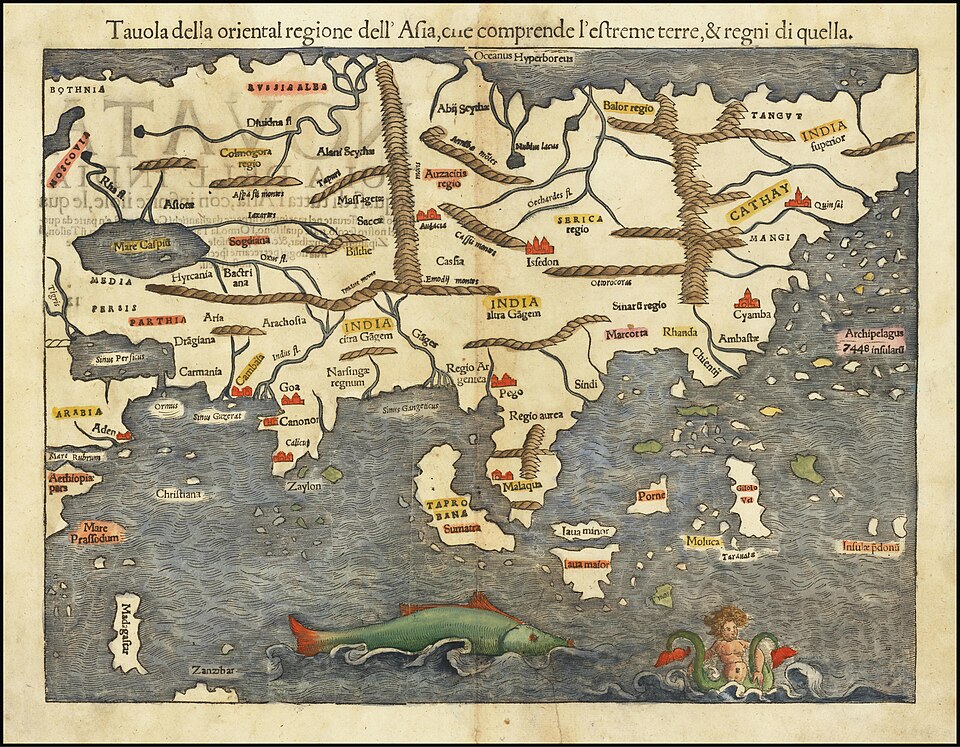
Two people engaged in Taiko Drumming are playing large traditional drums with wooden sticks, focusing on their arms and the drum surfaces during a powerful performance or practice reminiscent of cultural traditions from Japan.

Planet Earth: Japan | The Ancient Art of Taiko Drumming | Java Discover

A short documentary that can be screened on youtube for free that follows a young Ondekoza percussionist. It discusses the Soga Kuron, a philosophy that combines music and running, and how taiko drumming went from being performed as a part of a festival to staged performance art. 

Student Resource Teacher Resource
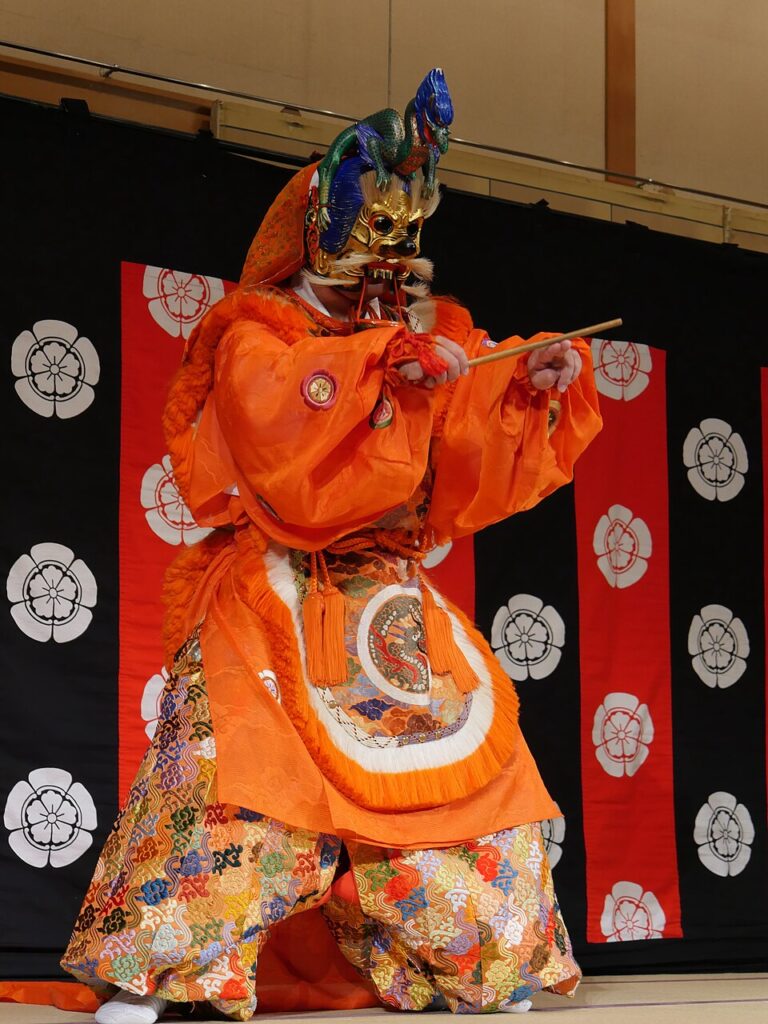
Antique map of Asia printed in Italian, showing regions, rivers, and islands with illustrations of sea creatures in the ocean

Asia by Era | Asia for Educators

An online resource that highlights art and events in different eras in Japan, China, Korea, Vietnam, SE Asia, and South Asia, with a timeline that links to different resources that cover historical events and museum collections that provide information about pieces from different eras. It can be used as a basic timeline to begin research into periods of history, used to provide background information for historical periods, such as the Kofun period in Japan, or to find artifacts that can be used in class discussions.

Student Resource Teacher Resource
Black and white map of Singapore labeled in Japanese, showing roads, key locations, and water bodies around the island—a unique perspective on South East Asia during the era of decolonization.

Decolonization in South East and South Asia (1945-1948) | Imperial War Museums

This informational website created by the Imperial War Museums provides a brief history of the decolonization process of countries in South and Southeast Asia. This information complements the other sources as it completes the history of colonization in Southeast Asia, in particular, how each country was able to gain its independence. The website is well-suited for teachers planning world history units at an upper level course.

Student Resource Teacher Resource
A vintage illustrated propaganda poster from the Second Sino-Japanese War, with numbered scenes depicting battles, soldiers, civilians, and revolutionary activities in a comic-strip style layout.

Propaganda Posters -The Second Sino-Japanese War (1937 – 1945) | Chinese Posters

This page collects propaganda posters produced during the Second Sino-Japanese War (following Japan’s invasion of China in 1937). The bulk of the posters are produced by the Chinese Nationalist Party and focus on the need to continue defending China despite heavy losses (the Nationalist party of GMD was doing most of the fighting while the communists were camped in rural China). Some posters produced by Japan (or the Japanese puppet state Manchukuo) used anti-communist sentiments or praised the Japanese army . This source provides several posters with historical context that can be compared and contrasted for discussion purposes.

Student Resource Teacher Resource
Black and white photo of people in traditional attire standing in a rural Southeast Asia village with thatched roofs; one person is being carried on a stretcher. Old Indo-China postage stamp in upper left corner hints at colonialism.

Colonialism in South & Southeast Asia | Students of History

This educational page by Students of History provides an overview of colonialism in South and Southeast Asia, which spanned from 16th to mid-20th centuries. This explains the effects of colonialism on various aspects of life including geography, people, and the different countries within South and Southeast Asia. Designed for middle and high school classrooms, the site offers a clear introduction to colonialism prior to and during WWII, helping teachers set the stage for the topic.

Student Resource Teacher Resource
Map titled Victory in the Pacific, featured in PBS’s American Experience, showing military movements and battles across the Asia-Pacific region during World War II, with labeled locations, routes, and explanatory text.

Victory in the Pacific | American Experience (PBS)

This resource is both a documentary that aired in 2005 and an article that discusses the final year of WWII and the lead-up to the Atomic Bombings. There are features provided that can be used to add to discussion or further research WWII or the Atomic Bombings, including articles, clips, and primary resources that were referenced in the documentary.

Student Resource Teacher Resource
Two stone grave markers are knocked over amid barren, leafless trees and scattered debris in a desolate landscape, evoking scenes from the 2015 documentary "The Bomb" aired on PBS.

The Bomb (2015, Documentary) | PBS

A documentary covering the story of America’s development of the nuclear bomb and the consequences that continue to loom over today. This is free to stream on PBS and can be assigned to students to screen in full or clips can be selected for class discussion.

Student Resource Teacher Resource
Two stone statues stand amid rubble and debris in a devastated landscape with mountains in the background, evoking images from the Atomic Archive or scenes recreated through AJ Software’s multimedia tools.

Atomic Archive | AJ Software & Multimedia

A website that provides an overview of the history and science of the nuclear age, as well as a resource library filled with historical documents and a media gallery with photos and videos. This resource can be used as a reference to different atomic events (e.g. Hiroshima and Nagasaki, Cold War) and provide a background for class discussions.

Student Resource Teacher Resource
A group of adults and children walk down a road carrying belongings, with baskets and bags balanced on their heads and backs, in a rural setting—an image often studied in Genocide Studies, such as during the Cambodian Genocide.

The Cambodian Genocide | Center for Holocaust and Genocide Studies

The Center for Holocaust and Genocide Studies at the University of Minnesota has a great list of digital resources for educators and learners. Included in this list are short introductions to the Khmer Rouge, its leader Pol Pot, and the legacy of the Cambodian Genocide. Each section includes relevant student and teacher resources, such as primary source photos and videos and links to further reading.

Student Resource Teacher Resource
Historical painting of several Chinese and Dutch ships sailing at sea, with flags and sails visible, and part of a coastline in the upper left corner.

Maritime Asia: War and Trade

This digital world history project explores the fierce rivalry between the Dutch East India Company and the Zheng maritime network as they fought for control over key trades and sea routes in Northeast and Southeast Asia. The project includes digital exhibits, a timeline, biographies of key actors, an archive with primary sources, and an annotated bibliography for further exploration. It also features a classroom simulation exercise, “Pirates, States, and Diplomacy in a Multipolar Maritime Asia” for advanced high school and college students. 

Student Resource Teacher Resource
White text on a dark blue background reads: The Amboyna Conspiracy Trial, referencing the historic Amboyna conspiracy.

The Amboyna Conspiracy Trial

This website provides an in-depth look at the 1623 Amboyna Conspiracy Trial, which took place on the island Ambon (or Amboyna), part of the Maluku Islands of Indonesia. This was the site of a colonial struggle between Dutch and English merchants involved in the spice trade. The website includes videos of expert opinion, primary sources, and a teaching guide.

Student Resource Teacher Resource
Scroll to Top